BRUTE.EXE is an educational cybersecurity simulator that demonstrates how brute-force password attacks work in a safe, controlled environment. The goal of the project is not to break into real systems, but to help users understand password strength, attack speed, common password weaknesses, and the importance of better security habits.
This project involved the design and development of an interactive web application focused on password security awareness. BRUTE.EXE visually simulates how weak passwords can be guessed more quickly than strong ones, while showing real-time feedback such as attempt count, estimated cracking time, password strength, and security warnings. I built the project as a safe learning tool for understanding brute-force concepts without targeting real accounts, networks, or systems. The application combines a terminal-inspired interface with educational feedback to make cybersecurity concepts easier to understand for beginners.

The visual design was inspired by retro terminal interfaces and classic cybersecurity dashboards. I used a dark interface with neon green, red, and amber accents to create a technical atmosphere while keeping the layout structured and easy to follow. Real-time stats, warning panels, and command-line inspired elements help make the simulation feel interactive and security-focused.
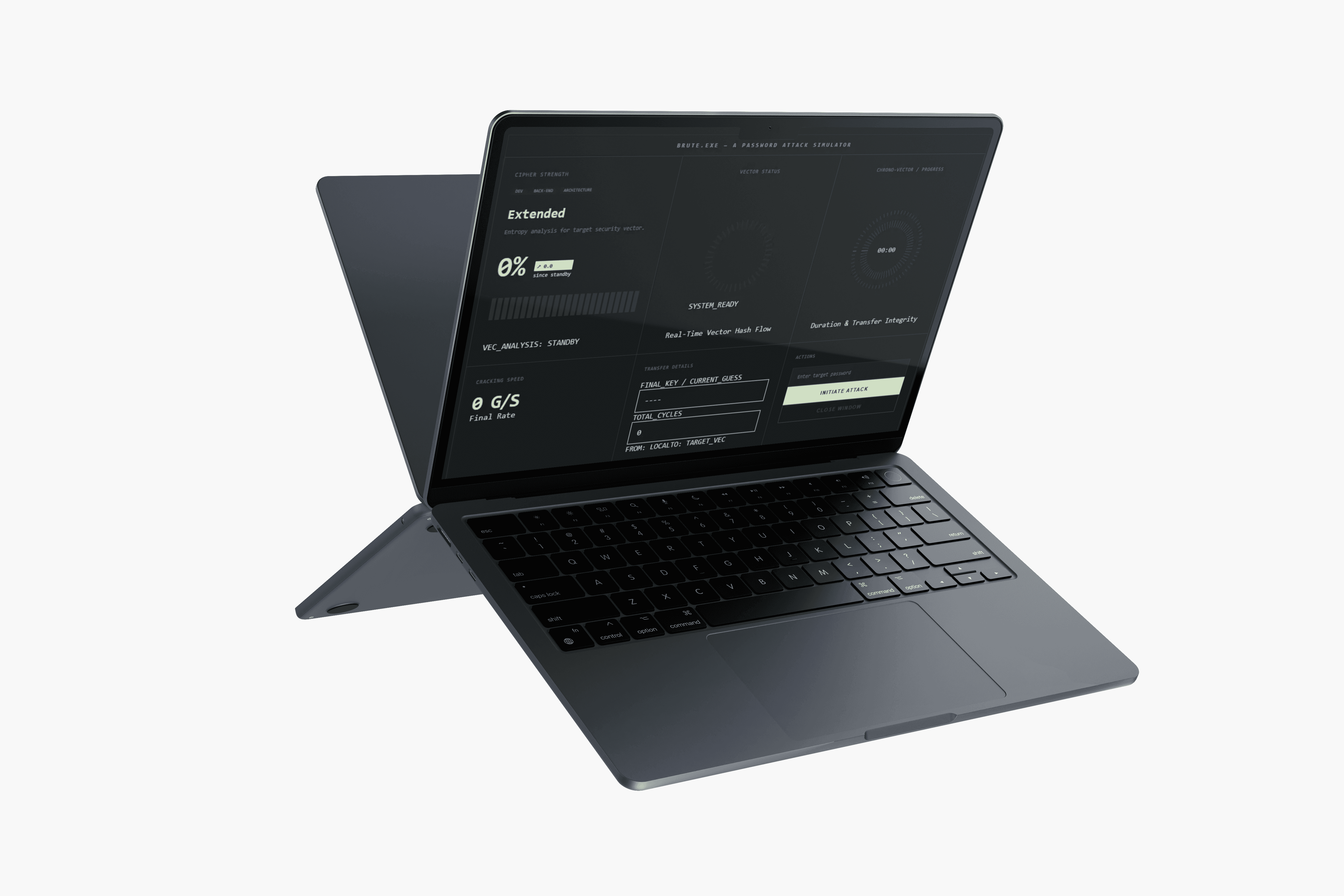
The application includes password strength analysis, a safe brute-force simulation, a real-time attempt counter, and estimated cracking time feedback. It also features a terminal-inspired dashboard, security tips for creating stronger passwords, and a responsive web interface that makes the tool accessible across different screen sizes.
Through this project, I improved my understanding of password security, brute-force attack concepts, interactive UI design, and responsible cybersecurity education. I also practiced turning a technical security topic into a clear and engaging web experience.


